How CARL Handles RSS Feeds
An RSS feed is a machine-readable file that lists your most recently published content. Feed readers, news aggregators, podcast apps, and other services subscribe to it and pull updates automatically when new content appears. For SEO purposes, RSS feeds also give Google a fast signal that new content exists on your site. CARL generates and maintains your RSS feed automatically, no plugin required.
How CARL Builds the Feed
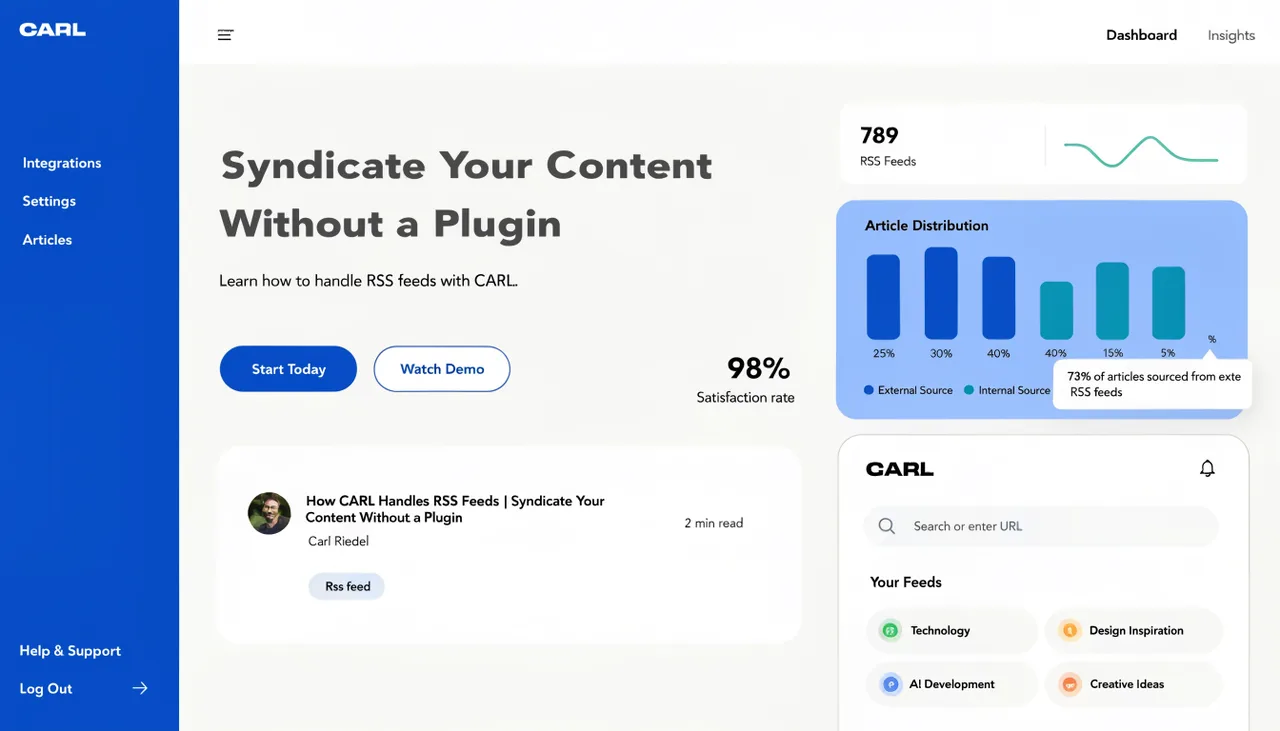
CARL generates your RSS feed from your published page records and serves it at the standard location: yourdomain.com/rss.xml. The feed updates each time you publish or regenerate pages, pulling the most recently published content into the file. You don't trigger the feed update manually. It happens as part of the normal publishing process.
The feed follows the RSS 2.0 specification, which is the format feed readers and aggregators expect. Each entry includes the page title, URL, publication date, and description. The description field pulls from the page's meta description, which is another reason the Generate Schema step matters: a well-written meta description serves double duty as the feed excerpt that subscribers and aggregators see.
RSS and Google Indexing
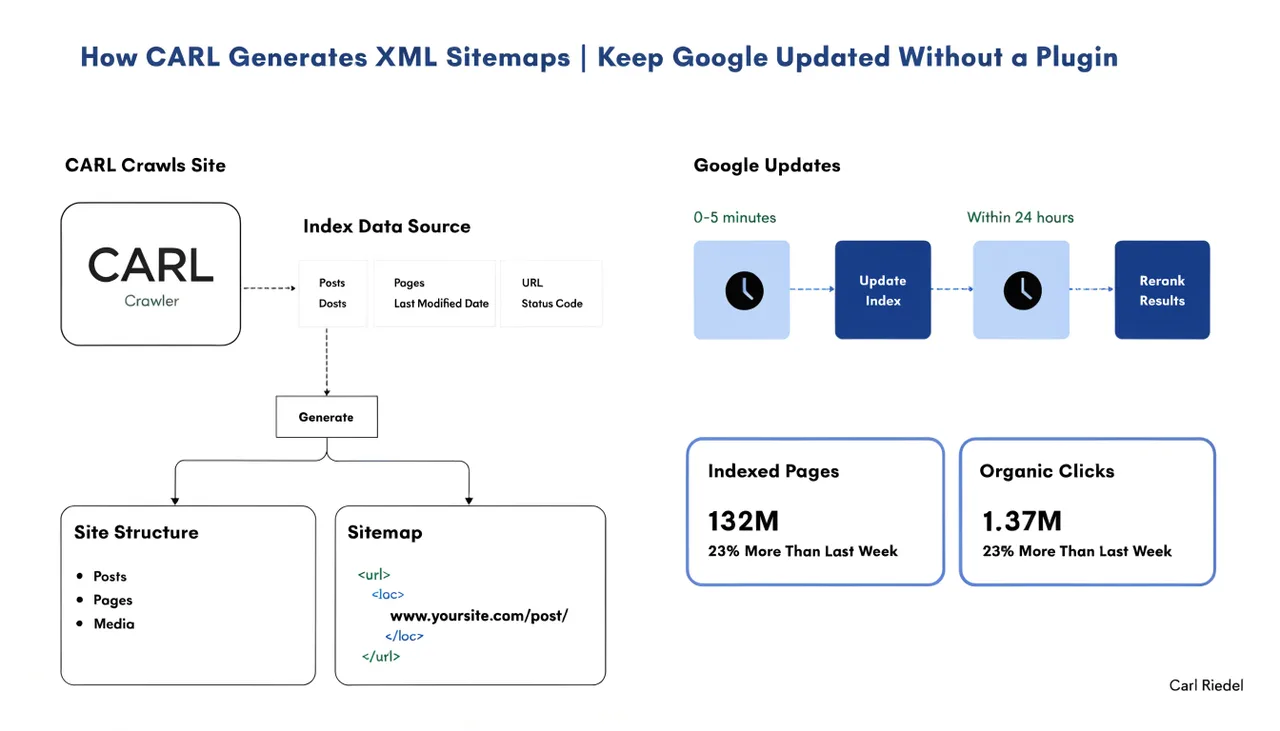
Google crawls RSS feeds as part of its discovery process. A new page that appears in your RSS feed can be picked up and queued for indexing faster than a page Google finds only by following internal links. Combined with a submitted XML sitemap, the RSS feed gives Google two separate signals that new content has been published. On an actively updated site, that combination keeps crawl frequency high.
CARL pages already have a structural advantage here. The static PHP files load fast, the structured data is in place, and there's nothing for Google's crawler to trip over during execution. The RSS feed simply ensures new content gets noticed sooner rather than waiting for Google to find it through internal links alone.
Feed Readers and Content Syndication
Readers who subscribe to your RSS feed receive updates whenever you publish, without you having to notify them directly. For a content-heavy site like a wiki or a blog, this is a low-effort way to build a returning audience. Someone who subscribes via RSS is actively choosing to follow your output, which makes them a more engaged reader than someone who finds a page through search once and never returns.
Some content aggregators and curation platforms also automatically pull from RSS feeds. If your content is relevant to a niche community that uses feed aggregators, being present in those feeds extends your reach without any additional distribution effort on your part.
Submitting Your Feed
Google Search Console doesn't require a separate RSS feed submission, unlike sitemaps. Google discovers and crawls RSS feeds on its own once it's familiar with your domain. If you want to make the feed easy to find for human subscribers, add a visible RSS link in your site's navigation or footer. The URL is always yourdomain.com/rss.xml. So it's consistent across every CARL install.