How CARL Generates XML Sitemaps
An XML sitemap is a file that lists every page on your site you want search engines to crawl and index. It's not a ranking factor, but it's a reliable way to ensure Google knows your pages exist, particularly for newer sites that don't yet have the inbound links that would naturally lead crawlers to every page.
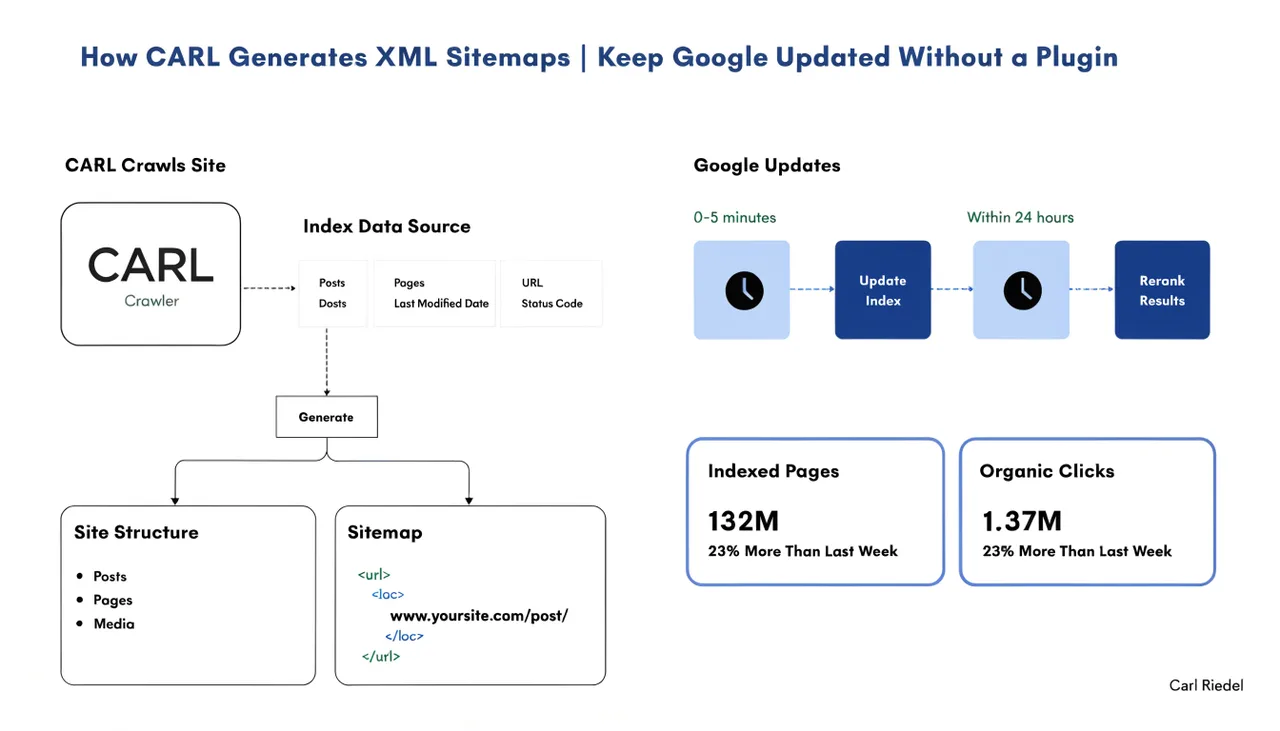
CARL generates your sitemap automatically, keeps it up to date as you publish, and serves it as a static file without any plugins.
How CARL Builds the Sitemap
Every time you generate a page in CARL, the sitemap is updated to include it. CARL pulls the published page records from the database, builds a valid XML sitemap file, and writes it to your server. The sitemap is available at the standard location crawlers expect: yourdomain.com/sitemap.xml. You don't need to trigger a separate sitemap generation step or install an SEO plugin to get a working sitemap.
Pages with a status of draft or scheduled are not included in the sitemap. Only published pages make it into the file. If you unpublish a page or delete its generated file, the next sitemap update removes it from the list.
What the Sitemap Contains
CARL's sitemap follows the standard XML sitemap protocol. Each entry includes the page's full URL of the published PHP file, and the
Priority and changefreq values are optional in the sitemap protocol and have minimal influence on how Google actually crawls your site. CARL keeps the sitemap clean and doesn't pad it with values that Google largely ignores.
Submitting Your Sitemap to Google
Once your site is live, submit the sitemap URL to Google Search Console. Go to the Sitemaps section, enter sitemap.xml, and submit. Google will crawl it, report how many URLs it found, and begin indexing your pages. On a new site with no existing backlinks, this is the fastest way to get your pages into Google's index.
CARL pages index quickly regardless: the static PHP files load fast, the structured data is in place from the Generate Schema step, and there's no dynamic execution for Google's crawler to trip over. Submitting the sitemap simply ensures Google has a complete list of pages to work from rather than discovering them only through internal links.
The Sitemap and Bulk Regenerate
When you run bulk regenerate, the sitemap is rebuilt as part of the process. Every published page gets a fresh
Multiple Sites, Multiple Sitemaps
Each CARL install generates its own sitemap for its own domain. If you're running multiple domains on the same server, each install maintains a separate sitemap.xml at its own domain root. There's no crossover between installs and no configuration required to keep them separate. The sitemap for each site reflects only the published pages in that site's database, as described in "How CARL handles multiple domains on one server."